
NYSE Becomes Latest Venue To Exhibit Satoshi Nakamoto Statue
The New York Stock Exchange is the sixth site to exhibit Valentina Picozzi’s Satoshi Nakamoto statue.

The New York Stock Exchange is the sixth site to exhibit Valentina Picozzi’s Satoshi Nakamoto statue.
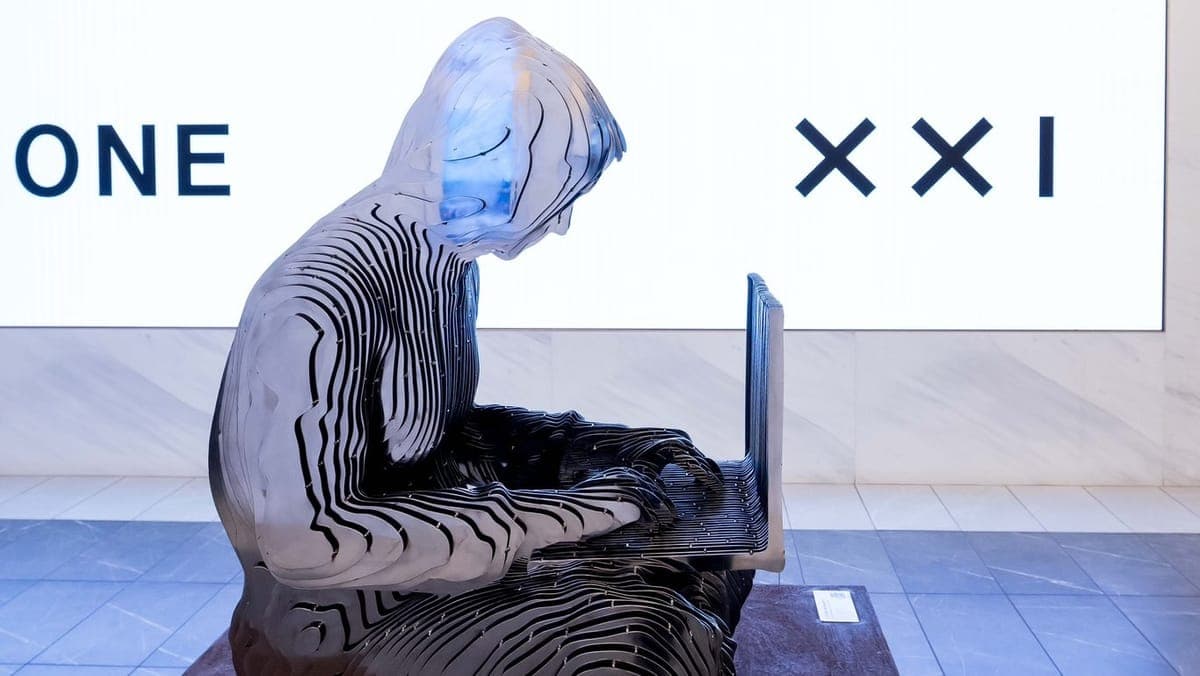
The New York Stock Exchange has installed Valentina Picozzi’s “disappearing” Satoshi Nakamoto statue, the sixth location to host the artwork.
The exhibition was arranged by Bitcoin firm Twenty One Capital, which began trading on the exchange earlier this week.
In a public post on X, the NYSE described the installation as “shared ground between emerging systems and established institutions.”
“Satoshi Nakamoto”
— NYSE 🏛 (@NYSE) December 10, 2025
Valentina Picozzi - @satoshigallery
Twenty One Capital places a statue of Satoshi Nakamoto, the inventor of bitcoin, in NYSE. Its new home marks a shared ground between emerging systems and established institutions. From code to culture, the placement… pic.twitter.com/sTiNq3h5HY
The statue is part of Picozzi’s ongoing series depicting the pseudonymous Bitcoin creator.
Picozzi, posting under the Satoshigallery handle, wrote that the installation’s placement was “mind-blowing” and added, “this is such an achievement, even in our wildest dream we wouldn’t think about placing the statue of Satoshi Nakamoto in this location! The 6th/21 statues of Satoshi Nakamoto found its home in the NYSE.”
The installation aligns with several dates associated with Bitcoin’s early development.
Nakamoto launched the Bitcoin mailing list on December 10th, 2008, and mined the network’s genesis block on January 3rd, 2009, releasing the first 50 Bitcoin.
Public discussion of Bitcoin has shifted over time. Early reactions from governments, regulators, and financial institutions were generally cautious, and some critics have described certain government actions, referred to by them as Operation Chokepoint 2.0, as restricting access for Bitcoin and crypto businesses.
In the years that followed, public discussion of Bitcoin shifted. Several major financial firms have increased their engagement through Bitcoin-related products, and some leaders, including BlackRock CEO Larry Fink, have publicly revised earlier views.
According to data compiled by Bitbo, public companies, private firms, investment funds, and several governments collectively hold more than 3.7 million Bitcoin.
Separately, the artwork itself has also taken on a global footprint. Picozzi has installed related statues in Switzerland, El Salvador, Japan, Vietnam, and Miami.
She has stated an intention to create 21 statues globally, a number she has linked to Bitcoin’s maximum possible supply of 21 million.
“The statue itself wants to give to the viewer this feeling of disappearance, and the sense that the inventor stays between the lines, as of today, Satoshi exists in the lines of the Bitcoin code, allowing humanity to have the first decentralized payment system,” she said.
The piece, depicting “a hacker in his stereotyped pose, sitting with the laptop on his legs,” is presented as a tribute “to all the developers and programmers around the world that helped build the Bitcoin ecosystem, fighting for transparency and freedom.”